
Last time, during COVID, I was unable to catch a flight, even though I had already paid for the tickets. My entire brain was screaming, “How could I miss the tickets?” It wanted me to take the risk and board the flight and visit the place.
Then I realised, the risk of travelling during COVID was not worth it, and the money I spent on the airfare was a Sunk Cost and not worth basing decisions upon.
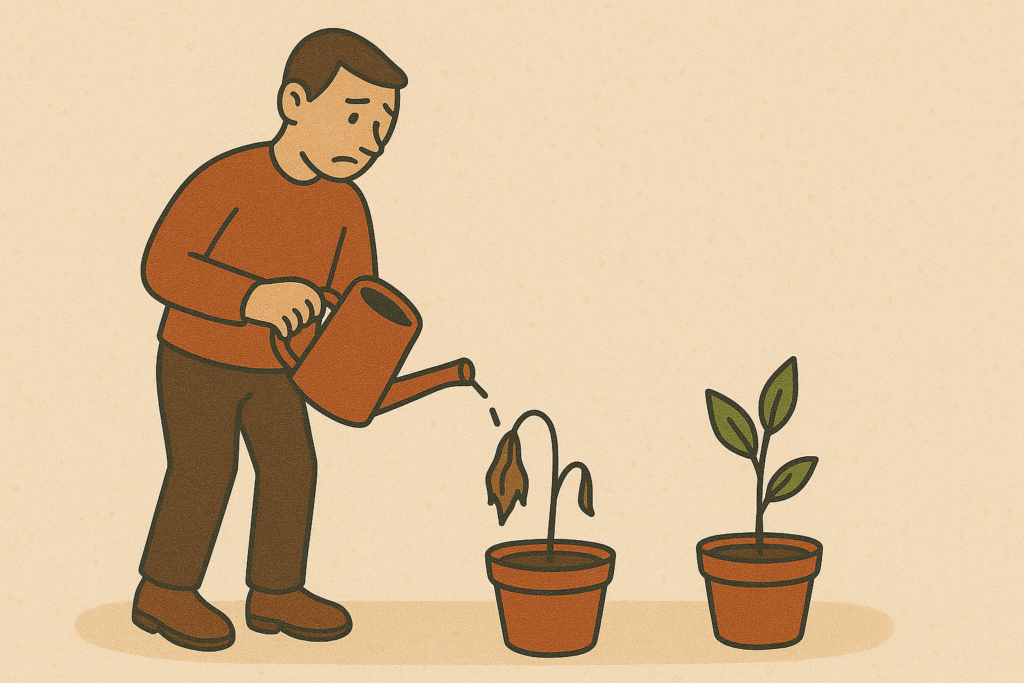
Concept: Sunk Cost
A sunk cost is any cost that has already been incurred and cannot be recovered, regardless of future decisions. Such costs need to be considered irrelevant for future decision-making.
Decision-making should always focus on future costs and future benefits, not past expenses.
Example 1: Amusement Park Ticket
- You bought a non-refundable ticket for ₹5,000.
- To go, you must now spend another ₹3,000 on travel.
Key Question: Should you go?
- The ₹5,000 ticket is a sunk cost — it’s already paid and cannot be recovered.
- The relevant decision is whether the benefit of visiting (the enjoyment, satisfaction, etc.) is greater than the additional ₹3,000 you’ll spend.
✅ Logical Choice:
Go only if the enjoyment (expected benefit) > ₹3,000.
Don’t go just because “you already paid ₹5,000.” That ₹5,000 is gone either way.
Example 2: Business Project
- Project total expected cost = ₹50,00,000
- Already spent = ₹40,00,000
- Estimated completion cost = ₹10,00,000
- Revised selling price = ₹45,00,000, otherwise recover only 30,00,000.
Question: Should we continue?
- The ₹40,00,000 already spent is sunk.
- The relevant comparison:
Additional cost (₹10,00,000) vs. Expected benefit (₹45,00,000)
✅ Decision:
Continue only if expected revenue (₹45,00,000) > additional cost (₹10,00,000).
If not, stop even if it feels painful — the sunk cost trap tempts you to “justify” past spending, but that’s irrational.
Psychological Trap
People often fall for the “sunk cost fallacy” — continuing a losing project or plan simply because they’ve already invested time, money, or effort.
This happens due to loss aversion and emotional attachment to past efforts.
We tend to give higher weights to the decisions we took in the past. This is the brain’s way of telling us we are right in the past. This results in a situation where we get attached to those decisions and tend to follow them in the future also. However, right decisions should be based on the present and future and not the past.
How to identify them?
| Type of Cost | Relevance for Decision | Example |
|---|---|---|
| Sunk Cost | Irrelevant | ₹5,000 ticket already paid |
| Incremental / Future Cost | Relevant | ₹3,000 travel expense |
| Future Benefit | Relevant | Enjoyment / sale value |